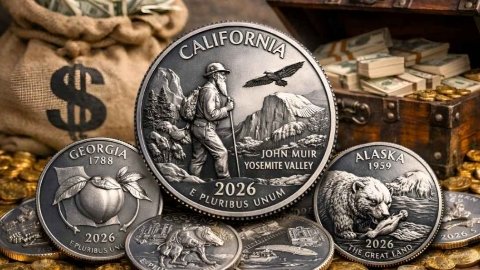
The U.S. State Quarters program (1999–2008) released 50 unique designs to honor each state, sparking huge interest in coin collecting. While most are worth just 25 cents, rare errors, high-grade examples, low-mintage proofs, and special varieties have driven values way up. In 2026, collector demand remains strong, fueled by online auctions, social media stories, and the hunt for hidden gems in pocket change or old jars.
The title mentions “over $21 million” — this refers to the combined estimated or auction value of the top rare specimens across famous examples, unique errors, and pristine pieces from the series (as highlighted in collector guides and market reports). No single State Quarter reaches millions alone, but legendary errors and top-graded coins contribute to massive collective worth in the hobby. Here are the top 10 rare State Quarters that stand out in 2026, with current value estimates based on recent sales, PCGS/NGC data, and market trends. Values vary by condition—pristine (MS67+ or Specimen grades) fetch the highest prices.
1. 2004-D Wisconsin Extra Leaf Quarter
The most famous modern error: An extra leaf on the corn stalk (high leaf or low leaf variety) from a die issue.
Why valuable: Eye-catching mistake with strong collector appeal.
2026 estimated value: $50–$150 circulated; $1,000–$6,000+ in top uncirculated grades.
2. 1999-P Connecticut Broadstruck Quarter
A major error where the coin was struck without a collar, making it wider and spread out.
Why valuable: Dramatic size and shape change; rare experimental planchet errors add hype.
2026 estimated value: $500–$4,000+ (some PCGS-graded examples exceed $4,000).
3. 1999-S Delaware Proof Quarter
San Francisco-minted proof with “S” mark; low-mintage for proofs in perfect condition.
Why valuable: First-year proof from the program; flawless examples are scarce.
2026 estimated value: $500–$1,000+ in pristine proof condition.
4. 2005 Minnesota Doubled Die Quarter
Extra or partial trees on the right side due to doubled die error.
Why valuable: Clear doubling on design elements excites collectors.
2026 estimated value: $50–$700+ (dramatic versions higher in MS grades).
5. 1999 Delaware Spitting Horse Quarter
Die crack makes the horse look like it’s “spitting” on the reverse.
Why valuable: Fun, recognizable variety from the program’s start.
2026 estimated value: $10–$25 circulated; $200–$1,500+ in high grades.
6. 2005 Kansas “In God We Rust” Quarter
Missing “T” in “TRUST” creates the funny “RUST” error.
Why valuable: Humorous and noticeable lettering mistake.
2026 estimated value: $10–$30 circulated; $200–$1,000+ uncirculated.
7. 2000-P South Carolina Quarter (High-Grade MS69)
Pristine uncirculated examples with exceptional luster.
Why valuable: Rarity in near-perfect condition; auction records show strong demand.
2026 estimated value: $500–$3,000+ for MS69 graded.
8. 2008-D Alaska Quarter (MS69)
High-grade uncirculated from the final year; low survival in top shape.
Why valuable: Pristine examples are tough; past auctions hit over $2,000.
2026 estimated value: $500–$2,350+ in MS69.
9. 1999-P Georgia or Other Early Error Varieties
Off-center strikes, doubled dies, or minor errors from first releases.
Why valuable: Early program errors gain nostalgia value.
2026 estimated value: $100–$1,000+ depending on severity.
10. Rare Wrong Planchet or Major Strike Errors (Various States)
Extreme mistakes like wrong metal planchet or multi-strikes across states.
Why valuable: Ultra-rare dramatic errors; some fetch thousands in auctions.
2026 estimated value: $750–$10,000+ for major ones.
Here’s a quick comparison table:
| Rank | Quarter & Variety | Year/Mint | Key Feature/Error | Estimated Value (2026) | Where to Find |
|---|---|---|---|---|---|
| 1 | Wisconsin Extra Leaf | 2004-D | Extra leaf on corn | $50–$6,000+ | Change, rolls |
| 2 | Connecticut Broadstruck | 1999-P | Oversized, no collar strike | $500–$4,000+ | Circulation errors |
| 3 | Delaware Proof | 1999-S | San Francisco proof, pristine | $500–$1,000+ | Proof sets |
| 4 | Minnesota Doubled Die | 2005 | Extra/partial trees | $50–$700+ | State rolls |
| 5 | Delaware Spitting Horse | 1999 | Die crack “spit” line | $10–$1,500+ | Early quarters |
| 6 | Kansas “In God We Rust” | 2005 | Missing “T” in TRUST | $10–$1,000+ | Change jars |
| 7 | South Carolina High-Grade | 2000-P | MS69 pristine | $500–$3,000+ | Uncirculated |
| 8 | Alaska High-Grade | 2008-D | MS69 pristine | $500–$2,350+ | Final year |
| 9 | Early Error (e.g., Georgia) | 1999-P | Off-center/doubled | $100–$1,000+ | First releases |
| 10 | Major Errors (Wrong Planchet) | Various | Extreme mint mistakes | $750–$10,000+ | Rare finds |
These values come from auction records, PCGS/NGC pops, and 2026 market reports—prices rise with certification and demand.
Tips for Hunting Rare State Quarters in 2026
- Use a magnifying glass to spot errors like extra leaves, doubling, or odd shapes.
- Check mint marks (P, D, S) and edges for issues.
- Search old rolls, change jars, or bank boxes—many errors still circulate.
- Don’t clean coins (it hurts value); get pros to grade if suspicious.
- Follow coin news and join online groups for updates.
Conclusion
State Quarters from 1999–2008 prove everyday coins can become treasures worth thousands—or contribute to a hobby market worth millions in top rarities. In 2026, errors like the Wisconsin Extra Leaf and high-grade proofs lead the pack, blending history, fun mistakes, and big potential payouts. Grab your loose change or dig out old collections—you could have a winner. Start checking today; the next big find might be yours!
FAQ
Are any State Quarters really worth millions alone?
No single one hits millions, but top errors and collections add up to huge values (e.g., $21M+ across legendary pieces).
What boosts a State Quarter’s value most?
Mint errors, pristine condition (high MS grades), low mintage proofs, and certification from PCGS/NGC.
Can I still find these in circulation in 2026?
Yes—errors like Extra Leaf or doubled dies turn up in change, rolls, or jars.
How do I check if mine is valuable?
Magnify for odd features; compare to guides. Get graded for serious finds.
Where to sell a rare State Quarter?
Coin dealers, eBay, or auctions like Heritage. Always appraise first.