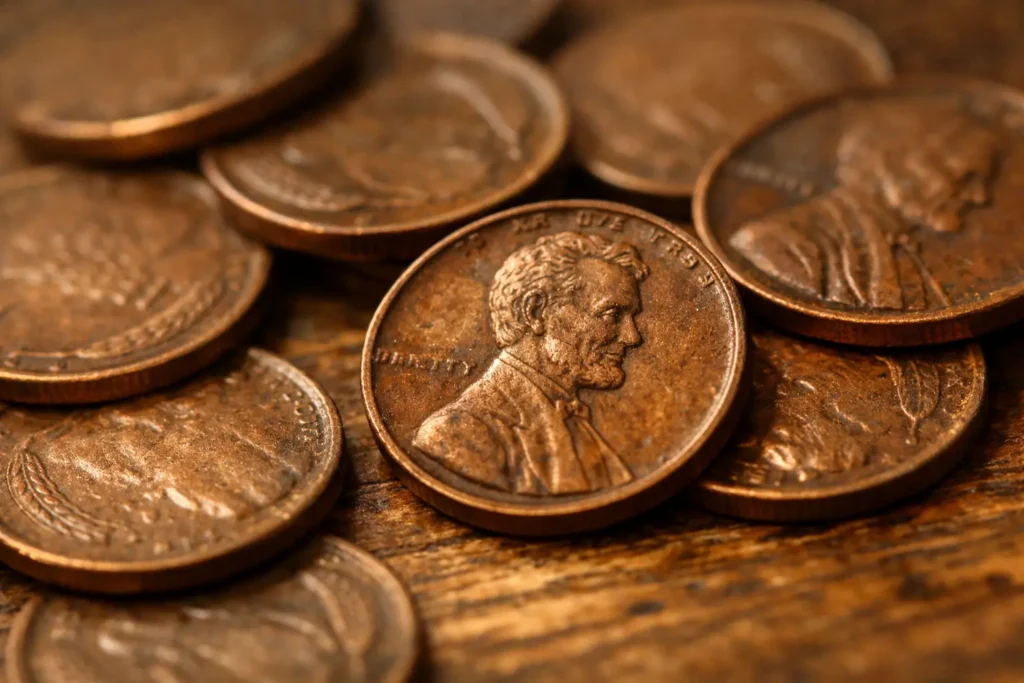
Wheat pennies were minted from 1909 to 1958 and still turn up in pocket change and collections. A few specific dates and errors are worth far more than their face value, but identifying them requires careful inspection and basic knowledge.
Top 9 Most Valuable Wheat Pennies
Below are nine wheat pennies that collectors hunt for. Each entry explains how to identify the coin and why it is valuable. Grades, rarity, and authenticity determine real market value.
1. 1909 S VDB Wheat Penny
One of the most famous early Lincoln cents, the 1909 S VDB was struck in San Francisco and carries designer Victor David Brenner’s initials on the reverse. Low mintage makes this coin rare in high grades.
- How to spot it: Look for an S mint mark on the obverse below the date and VDB on the reverse rim.
- Common condition issues: Heavy circulation removes VDB details, reducing value.
2. 1909 VDB (Philadelphia)
The Philadelphia 1909 VDB is rarer than many later dates because the VDB initials were removed mid-year and reintroduced only on a limited number of coins. It is sought by early cent collectors.
3. 1914 D Wheat Penny
The 1914 D (Denver) is prized because of its low mintage and scarcity in higher grades. It is often the centerpiece of early Lincoln cent sets.
- Tip: Strong detail on Liberty and wheat stalks usually indicates better grade, which raises the price.
4. 1922 Plain (No D) Wheat Penny
Most 1922 cents from Denver show a weak or missing D due to overpolishing of the hub, but examples with no D at all are rare and valuable. Look carefully under magnification for a faint mint mark impression.
5. 1931 S Wheat Penny
The 1931 S is another low-mintage San Francisco issue. Good-condition specimens are scarce and command a premium.
6. 1955 Doubled Die Obverse Wheat Penny
This error shows a very obvious doubling of the date and the word LIBERTY. It is one of the most recognizable and valuable modern errors in the series.
- How to identify: Use a magnifier to look for clear doubling on the date and inscriptions on the obverse.
- Note: Refrain from calling any weak doubling a 1955 doubled die; confirm with reference images or an expert.
7. 1943 Bronze or Copper Wheat Penny
Most 1943 cents were struck in zinc-coated steel because copper was needed for war efforts. A small number of 1943 copper or bronze cents were mistakenly struck and are extremely valuable.
- Identification tip: Weigh the coin. Steel 1943 cents are magnetic and lighter; bronze/copper ones are nonmagnetic and feel heavier.
- Warning: Many plated or altered coins are passed off as errors—authentication is essential.
8. 1944 Steel Wheat Penny
Conversely, a few 1944 steel cents exist and are rare because most 1944 cents were bronze. Like the 1943 bronze errors, these require careful verification and professional grading.
9. 1916 Doubled Die or High-Grade Issues
Some early-dated cents from the 1910s show minting anomalies or simply survive in high grade, making them desirable to type and early Lincoln collectors.
How to Check If Your Wheat Pennies Are Valuable
Finding a potentially valuable wheat penny starts with simple steps you can do at home. Use tools and references to avoid misidentifying common coins as treasures.
- Magnification: Use a handheld loupe (10x) to inspect dates, mint marks, and doubling.
- Weight test: For suspected 1943 copper, check for magnetism and compare weight to reference charts.
- Reference images: Compare to reputable dealer and grading service photos online.
- Get a second opinion: Join a coin club, post clear photos in collector forums, or consult a dealer for guidance.
The Wheat Penny design appeared on the reverse of Lincoln cents from 1909 through 1958, replaced in 1959 by the Lincoln Memorial reverse.
Real-World Example: A Small Case Study
A homeowner cleaning out an old coin jar found a worn 1955 Lincoln cent with unusual doubling on the date. After posting clear photos to a collector forum and sending the coin to a grading service for authentication, the owner learned it was a genuine 1955 Doubled Die Obverse in low grade. The coin sold at auction for a five-figure price after professional grading.
This example shows the typical path from discovery to sale: notice something unusual, verify with community and experts, then authenticate and sell through appropriate channels.
Selling and Protecting Valuable Wheat Pennies
If you suspect you own a valuable wheat penny, avoid cleaning or altering it. Cleaning can destroy the coin’s surface and cripple value.
Consider the following selling steps:
- Authenticate and grade with a reputable third-party grading service.
- Get multiple appraisals or auction estimates from established dealers or auction houses.
- Choose a sale channel: direct sale to a dealer, auction, or consignment via a specialist house.
- Account for fees: grading and auction fees reduce net proceeds, but they often increase buyer confidence and final price.
Store valuable pennies in inert coin holders and a dry, stable environment. Use archival-quality flips, capsules, or albums to prevent damage.
Many valuable wheat pennies still appear in everyday change. With basic tools and knowledge, you can separate common dates from the few that might turn pocket change into a meaningful find. When in doubt, seek professional authentication before making any sale or restoration decisions.