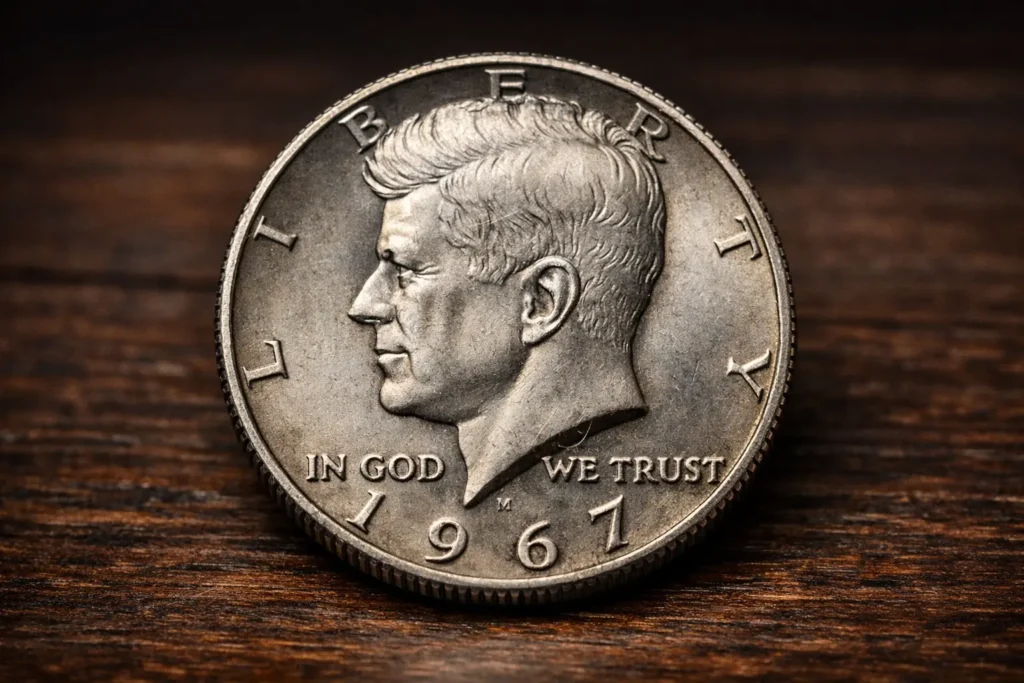
How a Kennedy Half Dollar Could Reach Extreme Value
Stories about a $10M Kennedy half dollar make for dramatic headlines, but the reality is grounded in rarity, condition, and provenance. For a half dollar to reach multimillion-dollar value it would need to be unique in a way that excites major collectors and museums.
In practical terms that means confirmed mint errors, an undocumented pattern coin, or an extremely rare struck piece with clear historical documentation. Without those elements, a Kennedy half dollar will typically sell for modest collector prices.
Key Features to Check on Your Kennedy Half Dollar
Start with basic identification: date, mint mark, and overall condition. These simple checks separate common circulation coins from candidates worth professional review.
Date and Mint Mark
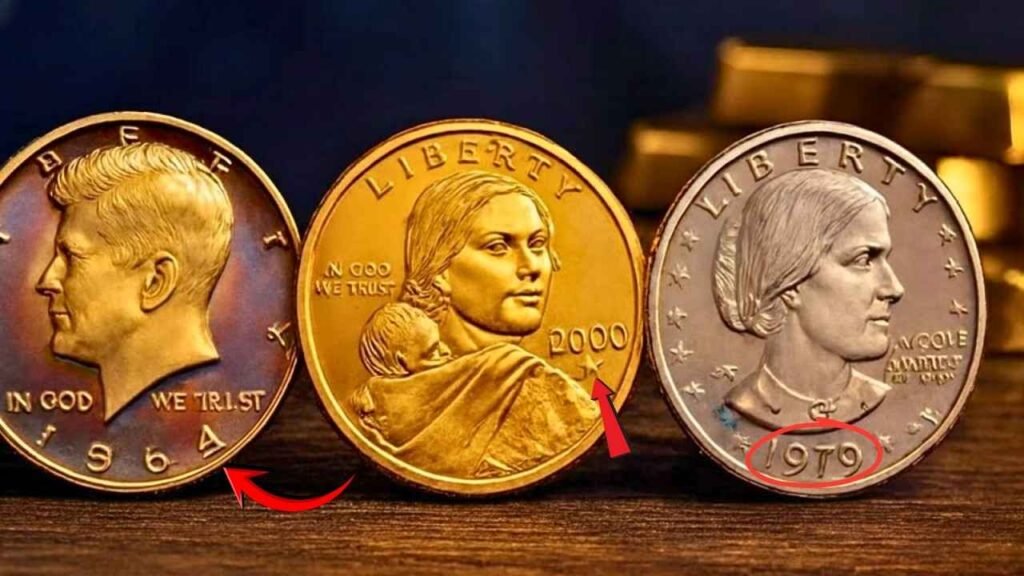
Look at the coin’s date and any mint mark. Most Kennedy halves are common from 1965 onward, but certain dates and mint marks can be more scarce. Mint marks are found on the obverse near Kennedy’s neck for some years and on the reverse or edge for others.
Composition and Finish
The 1964 Kennedy half is 90% silver, while 1965–1970 pieces are 40% silver. After 1970 most halves are copper-nickel clad. Silver content influences melt value and collector interest, but not multimillion-dollar status by itself.
Condition and Grading
Condition is critical. Coins graded MS65 and above (Mint State) are significantly more valuable than worn pieces. An uncirculated coin with original luster and no contact marks will demand higher attention from dealers and grading services.
Special Factors That Could Drive a $10M Price
A $10M valuation would require a combination of extraordinary properties. Collectors and auction houses look for elements that make an item irreplaceable.
- Unique mint error or pattern not recorded in official mint reports.
- Documented provenance linking the coin to a historic event or ownership.
- Flawless or near-flawless grading (e.g., PCGS or NGC proof-level scores near 70).
- Market excitement and competition among wealthy private collectors or institutions.
Common Kennedy Half Dollar Errors to Watch For
Errors can raise value substantially, though most do not approach multimillion-dollar figures. Learn the common error types so you can spot candidates for further evaluation.
- Double die obverse or reverse — where design elements appear doubled.
- Off-center strikes — partial images showing missing areas due to improper strike.
- Clipped planchets — sections of the coin missing where the planchet was improperly cut.
- Wrong planchet — a coin struck on the wrong metal composition or leftover planchet.
Example: Double Die
Double die varieties can be visually obvious at magnification and are often documented in reference guides. If you find a strong doubling effect on the date or lettering, photograph the coin and consider professional grading.
How to Authenticate and Get a Valuation
If you think your coin could be special, take a cautious, step-by-step approach. Rush decisions can reduce value or lead to scams.
- Document the coin with high-resolution photos of both sides and the edge.
- Compare to reference guides and online databases for known varieties and errors.
- Consult a reputable coin dealer for an initial, informal assessment.
- Send the coin to a recognized grading service (PCGS, NGC) for authentication and grading.
Grading provides a neutral condition score and often increases buyer confidence at auction. Expect fees and insurance costs when submitting a potentially valuable coin for grading.
Many headline coin values are driven by auction competition and provenance, not just rarity. A documented ownership history can multiply a coin’s price far beyond what condition alone would suggest.
Practical Steps If You Own a Kennedy Half Dollar
Handle your coin carefully. Oils and scratches reduce grade and value. Use cotton gloves or hold the coin by the edge, and store it in an archival quality sleeve or flip.
If you suspect a rare variety, avoid cleaning or polishing. Cleaning can permanently damage the surface and void numismatic value.
Where to Get Help
Start with local coin clubs and reputable dealers for screening. For higher stakes, use accredited grading services and auction houses. Keep all receipts and correspondence as provenance.
Real-World Case Study
In 2018 a collector submitted a worn Kennedy half to a local dealer thinking it was common. The dealer noticed unusual doubling on the date and advised grading. The grading service confirmed a recognized doubled-die variety and assigned a high Mint State score. At auction the piece sold for five figures — far above typical circulation values, though well short of millions.
This case shows the value of expert eyes and professional grading. It also highlights that most high-value sales still follow documentation, verification, and market demand.
When a $10M Coin Is Realistic
While possible in theory, a $10M Kennedy half dollar is highly unlikely without an extraordinary story. The coin would need to be a completely unique or near-unique piece with impeccable condition and strong provenance.
If you believe you have such an item, proceed carefully: document, consult, authenticate, and consider auctioning with a major house that can reach international buyers and institutions.
Summary: What to Do Next
Check the date, mint mark, and condition, then look for obvious errors. Photograph the coin and consult a reputable dealer if anything seems unusual. For serious candidates, use a recognized grading service and gather provenance before selling.
Most Kennedy halves are collectible but modestly priced. A multimillion-dollar result requires rare combination of factors. Still, careful inspection and proper authentication can turn an overlooked coin into a valuable find.