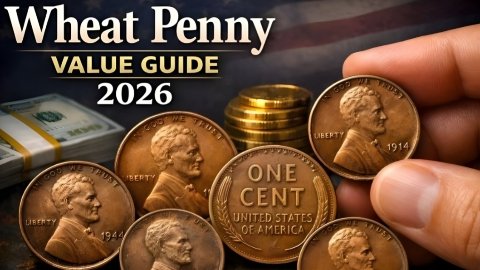
Have you ever looked at an old penny and wondered if it’s worth more than 1 cent? The Lincoln penny, first made in 1909 to mark 100 years since Abraham Lincoln’s birth, is one of the most collected coins in the world. It shows Lincoln on the front and wheat stalks (1909-1958) or the Lincoln Memorial (1959-2008) on the back. Today, in 2026, most pennies are worth face value, but rare dates, low production numbers, minting mistakes (errors), and coins in perfect shape can be worth hundreds, thousands, or even millions. This easy guide explains the top rare Lincoln pennies, what makes them special, and their current values based on recent sales and market trends.
A Quick History of the Lincoln Penny
The U.S. Mint started the Lincoln cent in 1909. Designer Victor David Brenner put Lincoln’s portrait on the front—the first real person on a U.S. coin—and wheat ears on the back (called “Wheat Pennies”). In 1959, the back changed to the Lincoln Memorial for Lincoln’s 150th birthday. From 1909-1958, pennies were mostly copper; in 1982, they switched to cheaper zinc with copper plating. During World War II (1943), pennies were made of steel to save copper, leading to famous mistakes. These changes, plus errors, create the valuable ones collectors hunt in 2026.
What Makes a Lincoln Penny Valuable?
Value comes from a few main things:
- Rarity — Low number made or few left in good shape.
- Condition — Graded by experts (like PCGS or NGC) from circulated (worn) to mint state (like new).
- Mint Mark — Tiny letter: none (Philadelphia), D (Denver), S (San Francisco).
- Errors — Mistakes like doubled letters, wrong metal, or off-center strikes.
- Demand — More collectors mean higher prices in 2026 auctions.
Always get suspected rare coins checked and graded professionally.
Top 10 Rare Lincoln Pennies and Their 2026 Values
Here are the most talked-about rare Lincoln pennies in 2026, with value ranges from recent auctions (circulated to top uncirculated/proof grades). These are estimates—actual prices vary.
| Rank | Coin Description | Year | Mint Mark | Key Feature/Error | Circulated Value | High-Grade Value |
|---|---|---|---|---|---|---|
| 1 | 1943 Bronze (Copper) Penny | 1943 | P, D, or S | Wartime steel planchet mistake (copper instead) | $100,000+ | $500,000 – $2,300,000+ |
| 2 | 1944 Steel Penny | 1944 | D (mostly) | Steel planchet error (should be copper) | $25,000+ | $75,000 – $1,700,000+ |
| 3 | 1909-S VDB | 1909 | S | Low mintage + designer’s initials (VDB) | $600 – $2,000 | $10,000 – $200,000+ |
| 4 | 1955 Doubled Die Obverse | 1955 | None | Strong doubling on date & letters | $1,000 – $1,500 | $10,000 – $125,000+ |
| 5 | 1914-D | 1914 | D | Very low mintage | $150 – $800 | $4,000 – $40,000+ |
| 6 | 1922 No D (Plain) | 1922 | None | Missing “D” mint mark error | $500 – $1,200 | $10,000 – $100,000+ |
| 7 | 1969-S Doubled Die Obverse | 1969 | S | Dramatic doubling on obverse | $10,000+ | $25,000 – $1,000,000+ |
| 8 | 1931-S | 1931 | S | Low mintage key date | $50 – $200 | $500 – $2,500+ |
| 9 | 1972 Doubled Die Obverse | 1972 | None | Noticeable doubling (Memorial era) | $50 – $200 | $1,000 – $5,000+ |
| 10 | 1992 Close AM or 1999 Wide AM | 1992/1999 | Various | Reverse lettering spacing error | $500 – $2,000 | $2,500 – $10,000+ |
Details on Key Rare Pennies
- 1943 Bronze Penny: Made during WWII when pennies were steel-coated zinc. A few were accidentally struck on leftover copper planchets. Extremely rare—only about 20 known. One sold for over $1 million recently; top ones hit $2.3 million in 2026 estimates.
- 1909-S VDB: The “holy grail” for many collectors. Low production (484,000) and initials caused controversy. High-grade ones are prized.
- 1955 Doubled Die: Famous error—doubling so clear you see it without a magnifier. A classic Wheat Penny treasure.
- 1922 No D: Denver mint mark erased by over-polished dies. Looks plain but super rare in top shape.
- Modern Errors (like 1992 Close AM): From Memorial era—small differences in “AM” on reverse make them stand out for newer collectors.
Tips for Finding and Selling Rare Lincoln Pennies
Check old jars, family collections, or bank rolls. Use a magnifying glass for mint marks (under date or reverse), doubling, or odd colors (1943 should not stick to a magnet if bronze). Avoid cleaning coins—it lowers value. For potential big finds, submit to PCGS or NGC for grading. Sell via trusted auctions (Heritage, Stack’s Bowers), coin dealers, or certified online sales. In 2026, the market stays hot with strong demand.
Conclusion
Lincoln pennies are everywhere, but the rare ones with key dates, low mintages, or exciting errors can turn pocket change into serious money—sometimes life-changing amounts—in 2026. From the legendary 1943 bronze to modern varieties like Wide AM, these coins connect history, mistakes, and treasure hunting. Start simple: look through your change or old coins carefully. You might uncover a gem worth far more than 1 cent. Coin collecting is fun, educational, and sometimes very rewarding—happy hunting!
FAQ
What is the most valuable Lincoln penny in 2026?
The 1943 bronze (copper) error tops the list, with some selling for over $1 million and estimates up to $2.3 million in perfect condition.
How do I spot a rare 1943 penny?
Normal 1943 pennies are steel and stick to magnets. A bronze one won’t stick, looks coppery, and weighs more. Get it checked by an expert.
Are 2026 Lincoln pennies valuable yet?
Regular 2026 circulation pennies are worth face value now. Collector versions or future errors might gain value later, but it’s too early.
Should I clean old pennies?
No—cleaning removes natural toning and can drop value a lot. Leave them as found.
Where can I sell a rare Lincoln penny?
Use reputable places like Heritage Auctions, local coin shops, or eBay with certification. Always get multiple opinions or appraisals first.