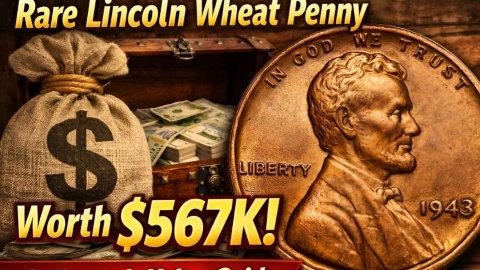
Have you ever sorted through old pennies and thought one might be a hidden fortune? The Lincoln Wheat penny (1909–1958), with Abraham Lincoln on the front and wheat stalks on the back, is full of surprises. Most are worth just a few cents, but rare errors and key dates can bring massive money. In 2026, one standout story is the rare Lincoln Wheat penny valued at around $567,000 — a real-life treasure that shows how a simple coin can change everything.
This guide explains the famous high-value example in easy words, why it’s so special, other valuable Wheat pennies, and tips to check your own coins. Values depend on condition (graded by experts like PCGS or NGC), rarity, and market trends. Pristine pieces always sell for more.
The $567K Lincoln Wheat Penny: What Is It?
The coin often linked to the $567,000 value is a rare 1943 Bronze (Copper) Lincoln Wheat Penny. In 1943, during World War II, the U.S. Mint switched pennies to steel (zinc-coated) to save copper for war efforts like bullets and wires. But by mistake, a few were struck on leftover copper planchets (blanks).
Only about 20–40 authentic examples are known today across all mints (Philadelphia, Denver, San Francisco). These “copper” 1943 pennies are one of the most famous errors in coin history. High-grade ones have sold for hundreds of thousands, with auction records and reports citing figures around $567,000 (or close, like $576,000 in some 2026 mentions) for top specimens.
Why so valuable?
- Extreme rarity — Most 1943 pennies are steel and common.
- Historical story — A wartime “oops” that captures imagination.
- Collector demand — Big auctions push prices higher every year.
To confirm one: A real 1943 copper penny won’t stick to a magnet (steel does), weighs about 3.11 grams (steel is lighter at ~2.7g), and has a bronze/copper color.
Other Top Valuable Lincoln Wheat Pennies in 2026
Besides the 1943 error, here are key ones collectors hunt:
- 1909-S VDB — First Lincoln penny with designer’s initials (VDB); low mintage from San Francisco.
- 1914-D — Very low production in Denver; a “key date.”
- 1922 No D — Missing mint mark error from Denver.
- 1955 Doubled Die — Famous error with blurry, doubled date and words.
These can reach thousands to tens of thousands in top condition, but none match the 1943 copper’s top prices.
Here’s a simple table of top rare Wheat pennies and values:
| Coin Variety | Year/Mint | Key Feature/Error | Estimated Value (2026) | Rarity Notes |
|---|---|---|---|---|
| 1943 Bronze (Copper) | 1943 | Wartime copper error | $150,000 – $567,000+ | 20–40 known; top auction star |
| 1909-S VDB | 1909-S | Low mintage + VDB initials | $1,000 – $50,000+ (MS grades) | Classic key date |
| 1914-D | 1914-D | Lowest mintage in series | $500 – $20,000+ | Key date for sets |
| 1922 No D | 1922-D | Missing “D” mint mark | $500 – $20,000+ | Famous weak strike error |
| 1955 Doubled Die | 1955 | Strong doubling on date/letters | $1,000 – $50,000+ | Iconic error |
Values rise with better grades (e.g., MS65+ red color) and certification. Market demand in 2026 keeps pushing prices up for authenticated pieces.
How to Check If You Have a Valuable Wheat Penny
Start simple—no need to be an expert:
- Look at the date — Focus on 1909–1958 Wheat reverse pennies.
- Check for errors — Use a magnifying glass for doubling, missing marks, or odd colors.
- Test the 1943 — If it’s 1943 and copper-colored (not silver/steel), test with a magnet and weigh it.
- Avoid cleaning — Washing or polishing drops value big time.
- Get it graded — If suspicious, send to PCGS or NGC for official opinion and slab (holder).
Search old jars, family collections, or bank rolls—some rarities still hide in circulation!
Latest Buzz in 2026
Collector interest in Wheat pennies stays high. Stories of rare finds spread online, and auctions set new records for errors and keys. The 1943 bronze keeps leading as the “holy grail” for many, with values holding strong or climbing in top condition.
Conclusion
A rare Lincoln Wheat penny worth $567,000 — like the legendary 1943 bronze error — shows how history, mistakes, and luck create real fortunes from pocket change. While most Wheat pennies are everyday coins, the thrill of finding a gem keeps millions hunting. In 2026, with strong markets and easy online resources, now’s a great time to look through your pennies. You might uncover your own surprise. Grab a magnifying glass, check dates and details, and enjoy the hunt—happy collecting!
FAQ
What Lincoln Wheat penny is worth $567,000?
It’s usually the rare 1943 bronze (copper) error penny, a wartime mistake with only a few dozen known.
How can I tell if my 1943 penny is the valuable copper one?
It should not stick to a magnet, weigh about 3.11 grams, and look bronze (not silver-steel). Get expert grading to confirm.
Are other Wheat pennies worth big money?
Yes—keys like 1909-S VDB, 1914-D, and errors like 1955 doubled die can reach thousands or tens of thousands in top shape.
Where can I sell a rare Wheat penny?
Trusted spots include coin dealers, major auctions (Heritage, Stack’s Bowers), or online platforms. Always get it appraised and graded first.
Do I need to clean old pennies?
No—cleaning often lowers value. Leave them natural and protect in holders.