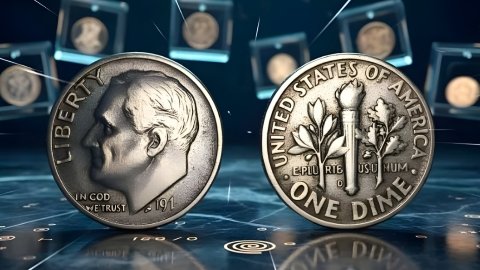
Ever found a shiny dime in your change and thought, “Could this be worth a fortune?” Roosevelt dimes, first issued in 1946 to honor President Franklin D. Roosevelt, feature his portrait on the front and a torch, olive branch, and oak branch on the back. Most are worth just 10 cents, but in 2026, certain rare dates, minting errors, high-grade examples, and special proofs can sell for thousands—or in extreme cases, much more. With strong collector interest and silver values holding steady, these “hidden treasures” are exciting to hunt. This simple guide covers the history, what boosts value, the top rare ones, and tips to check your own coins.
Quick History of the Roosevelt Dime
The Roosevelt dime replaced the Mercury dime right after World War II. It was a quick tribute to FDR, who passed away in 1945. From 1946 to 1964, dimes were made of 90% silver (worth more than face value due to metal content). After 1964, the U.S. switched to cheaper clad (copper-nickel) coins. Proof versions for collectors come from San Francisco (S mint mark), and special issues like the 1996-W add variety. Errors, like missing mint marks, make some ultra-rare.
What Makes a Roosevelt Dime Valuable?
Several factors decide if your dime is special:
- Rarity — Low numbers made or few surviving in good shape.
- Condition — Graded MS (mint state, uncirculated) or PR (proof) by PCGS or NGC. “Full Bands” (FB) or “Full Torch” (FT) on the reverse torch lines add big premiums.
- Mint Mark — P (Philadelphia, often none), D (Denver), S (San Francisco).
- Errors — Missing letters (like “No S”), doubled designs, or wrong planchet.
- Silver Content — Pre-1965 dimes have real silver (melt value around $2-3 in 2026, plus collector premium).
- Demand — In 2026, errors and high-grade silver pieces see strong auction prices.
Professional grading is key for top values—don’t clean coins, as it hurts worth.
Top 10 Rare Roosevelt Dimes and Their 2026 Values
Here are standout rare Roosevelt dimes based on recent auctions, market trends, and collector data. Values are approximate ranges (circulated to top grades like PR68+ or MS67+ FB).
| Rank | Coin Description | Year | Mint/Error | Key Feature | Circulated Value | High-Grade/Proof Value |
|---|---|---|---|---|---|---|
| 1 | 1975 No-S Proof | 1975 | S (missing) | Ultra-rare proof error (only ~2 known) | N/A | $300,000 – $500,000+ |
| 2 | 1968 No-S Proof | 1968 | S (missing) | Famous missing mint mark proof error | N/A | $20,000 – $60,000+ |
| 3 | 1949-S Silver | 1949 | S | Key date, low mintage silver issue | $5 – $20 | $1,000 – $25,000+ (FB) |
| 4 | 1950-S Silver | 1950 | S | Scarce silver key date | $5 – $20 | $1,000 – $30,000+ (FB) |
| 5 | 1964-D Full Bands High Grade | 1964 | D | Last silver year, superb strike | $3 – $10 | $3,000 – $25,000+ (FB) |
| 6 | 1982 No-P (Strong) | 1982 | P (missing) | Major circulation error | $50 – $200 | $200 – $1,000+ |
| 7 | 1970 No-S Proof | 1970 | S (missing) | Another rare no-S proof | N/A | $10,000 – $40,000+ |
| 8 | 1996-W | 1996 | W | Special West Point issue | $10 – $50 | $300 – $2,000+ |
| 9 | 1955 (P/D/S) Full Bands | 1955 | Various | Low mintage year, sharp details | $3 – $10 | $500 – $5,000+ (FB) |
| 10 | Doubled Die or Major Errors | Various | Various | Doubling, off-center, etc. | $50 – $500 | $1,000 – $15,000+ |
Details on Key Rare Dimes
- 1975 No-S Proof: The ultimate modern rarity—only a couple exist. Proof coins meant for collectors accidentally left without the “S” mark. One of the priciest modern U.S. coins.
- 1968 No-S Proof: Similar error from San Francisco proofs. Highly sought after; top examples fetch tens of thousands.
- 1949-S and 1950-S: Early silver key dates with lower production. In Full Bands (clear torch lines), they shine in auctions.
- 1982 No-P: Struck without the Philadelphia mint mark—big error in regular circulation coins.
- Full Bands/Full Torch: Not errors, but perfect strikes where the torch bands are fully separated. Boosts value hugely for silver-era coins.
Some sources mention ultra-rare or unique specimens hitting extreme figures like millions, but the proven top sales are in the hundreds of thousands for errors like the 1975 No-S.
Tips for Finding and Selling Rare Roosevelt Dimes
Search old change, family jars, or coin rolls. Use a magnifying glass to check for mint marks (below Roosevelt’s neck or on reverse), missing marks, doubling, or silver shine (pre-1965 have solid silver edge). Silver ones feel heavier and ring when tapped. Handle by edges only. For suspects, get graded by PCGS or NGC—certified coins sell higher. Use auctions like Heritage, coin dealers, or trusted online sites in 2026’s active market.
Conclusion
Roosevelt dimes look simple, but rare errors like the No-S proofs and key silver dates like 1949-S can turn 10 cents into thousands—or more—in 2026. With numismatics growing and focus on certified high-grade pieces, these coins offer fun history and potential rewards. Grab a magnifying glass and check your change or old collections—you could have a valuable find waiting. Coin hunting is exciting, connects you to the past, and might just pay off big!
FAQ
What is the most valuable Roosevelt dime?
The 1975 No-S proof error tops the list, with values often over $300,000 and up to $500,000+ in top condition—extremely rare with only a few known.
How do I spot a No-S proof dime?
Proof dimes usually have an “S” mint mark below Roosevelt’s neck. If missing on a 1968, 1970, or 1975 proof, it could be valuable. Proofs have shiny, mirror-like surfaces—not circulation coins.
Are silver Roosevelt dimes worth more?
Yes—pre-1965 ones have silver melt value (~$2-3 in 2026) plus collector premium. Key dates like 1949-S add thousands in high grade with Full Bands.
Can I find valuable Roosevelt dimes in circulation in 2026?
Possible for errors like 1982 No-P or clad varieties, but big-money ones (No-S proofs) come from sets, not pocket change. Check old proof sets or collections.
Where should I sell a rare Roosevelt dime?
Trusted spots include Heritage Auctions, Stack’s Bowers, local coin shops, or eBay with certification. Get an appraisal first for high-value pieces to maximize returns.