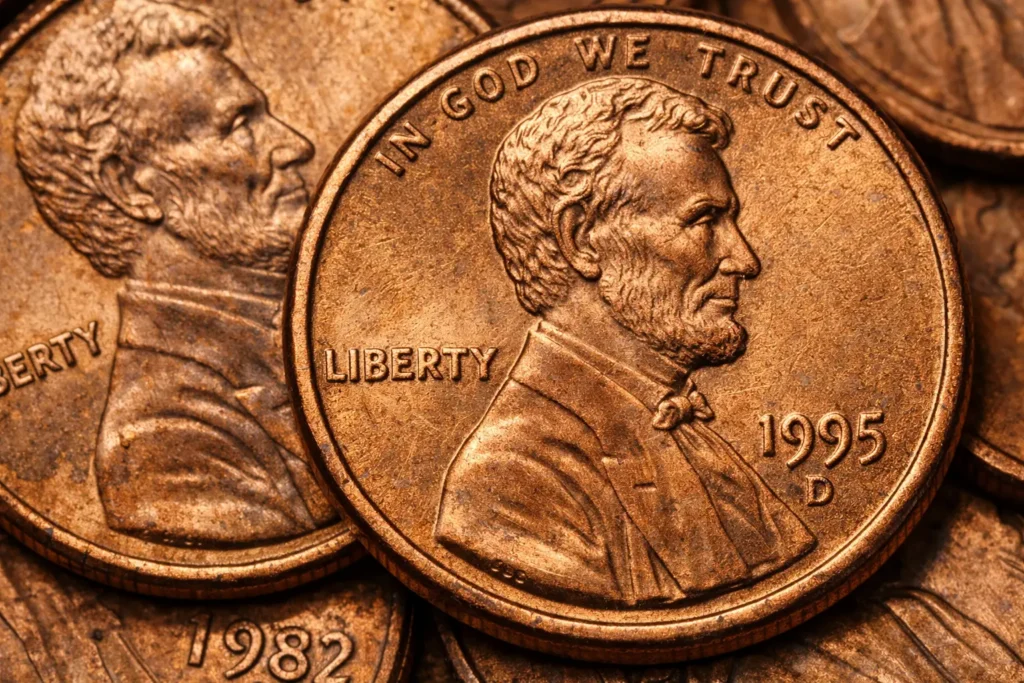
Many people check pockets and piggy banks for spare change, but a handful of Lincoln pennies that circulate today are worth far more than face value. This guide lists 13 rare Lincoln pennies and error types you may still find, explains why they matter, and shows how to check your coins practically.
How to spot rare Lincoln pennies
Look first at the date, mint mark, and obvious errors like doubling or missing letters. Use a magnifier or smartphone macro lens to inspect details closely.
Key indicators that a penny may be valuable include uncommon dates, doubled devices or letters, repunched mint marks, and major strike errors. Condition also matters: lightly worn coins are usually much more valuable than heavily worn ones.
Tools to check Lincoln pennies
- 10x jeweler’s loupe or macro phone lens
- Soft cloth and good light
- Reference book or reputable online price guide
- Local coin dealer or third-party grading service for confirmation
Top 13 rare Lincoln pennies still in circulation
Below are 13 key dates, varieties, and error types that collectors watch for. Each entry explains what to look for and why it is rare.
1. 1909-S VDB Lincoln penny
Look for the initials VDB on the reverse at the bottom rim. The 1909-S VDB had a low mintage and is a well-known key date among collectors.
2. 1909-S Lincoln penny (no VDB)
The 1909-S without the VDB initials is also scarce compared with later pennies and commands higher prices in circulated grades.
3. 1914-D Lincoln penny
Minted at Denver in low numbers, the 1914-D is a classic key date that can be valuable even when worn.
4. 1922 Plain (No D) Lincoln penny
This variety shows no Denver mint mark even though it was struck on Denver dies. The 1922 No D is unusual and sought after when found in circulation.
5. 1931-S Lincoln penny
Another scarce San Francisco issue, the 1931-S is noteworthy in both circulated and uncirculated conditions.
6. 1955 Doubled Die Obverse (DDO)
This famous variety shows strong doubling on Lincoln’s date, motto, and features. Even worn examples are widely recognized and valuable.
7. 1969-S Doubled Die Obverse
Known mostly as a rare doubled die from San Francisco, this variety is prized by specialists and can occasionally turn up in pocket change or old coin rolls.
8. 1972 Doubled Die Obverse
Look for doubling on the date and inscriptions. Several 1972 doubled die varieties exist; some are plentiful, others are scarce and collectible.
9. 1992 Close AM Lincoln penny
This modern variety changes the spacing in the word AMERICA on the reverse. It is subtle but identifiable under magnification and is popular with variety collectors.
10. 2004-D Wisconsin Extra Leaf
A widely publicized error, the 2004-D Wisconsin penny sometimes exhibits an extra leaf near the corn ear on the reverse. Two extra leaf varieties exist and they were found in circulation.
11. Off-center strikes
Off-center Lincoln pennies show part of the design missing due to improper striking. The value depends on how far off-center the strike is and which design elements are missing.
12. Repunched mint marks and RPMs
Repunched mint marks occur when a mint mark was punched more than once. Some RPMs are common, but strong, clear repunching can be collectible and sometimes appears on circulated coins.
13. Struck-through and planchet errors
These include coins with metal slivers, lamination defects, or foreign material struck into the face. Dramatic struck-through errors can be valuable if well documented.
Some of the most valuable Lincoln pennies were found in everyday change and household jars. Regularly checking small change increases your chances of discovering a rare example.
Practical tips for examining Lincoln pennies
- Start with date and mint mark; those are primary value drivers.
- Use magnification to check for doubling, repunched mint marks, or small errors.
- Compare to online images or a trusted reference before assuming value.
- Handle coins by the edges and avoid cleaning them; cleaning often reduces value.
Real-world example
A bank teller found a worn 1955 doubled die obverse in a coin deposit. After consulting a local coin dealer and getting the coin graded, the teller learned the coin was worth several thousand dollars compared with its one-cent face value. The teller sold the graded coin to a collector and used the proceeds for a family expense.
When to seek professional grading
If you find a coin that looks like one of the items above and it appears to be in unusually good condition or shows a dramatic error, consider professional grading. A certified grade and authentication from a reputable service can significantly increase buyer confidence and final sale price.
Final checklist before selling or grading
- Document clear photos from multiple angles.
- Do not clean or polish the coin.
- Get a second opinion from a reputable dealer or experienced collector.
- Research recent auction results for similar coins.
Finding a rare Lincoln penny in circulation is uncommon but not impossible. With simple tools, a little time, and this checklist, you can confidently examine change and spot coins worth more than one cent.