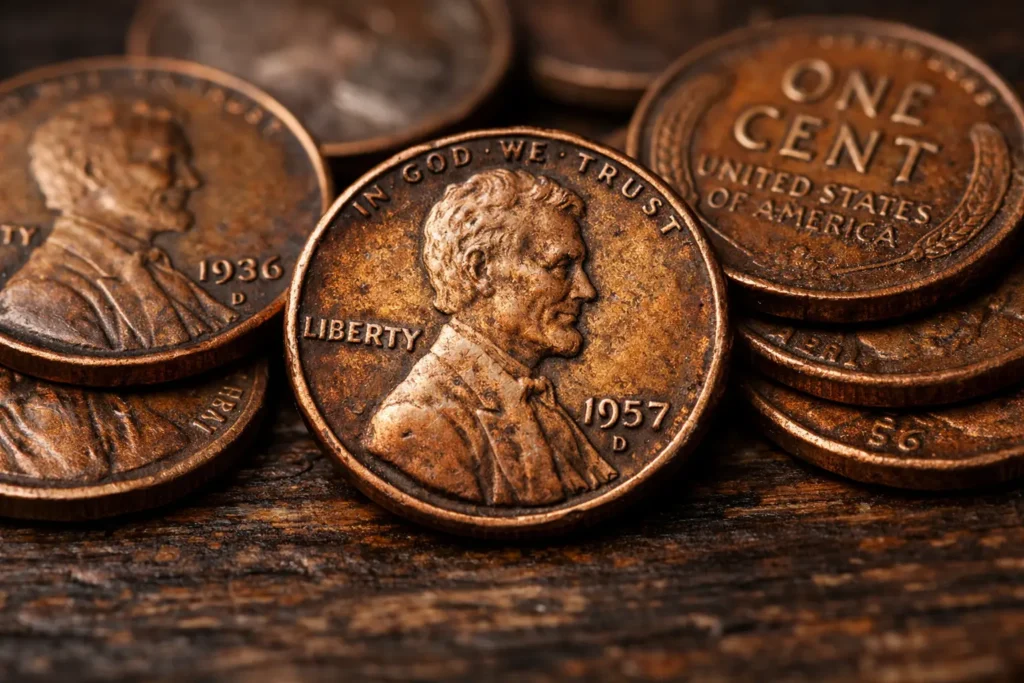
Top 16 Rare Lincoln Pennies Still in Circulation: Quick Guide
Lincoln cents have been minted since 1909, and a handful of rare dates and errors still appear in everyday change. This guide lists 16 rare Lincoln pennies you might encounter, explains how to identify them, and offers practical next steps if you find one.
Why these Top 16 Rare Lincoln Pennies Still in Circulation matter
Collectors value certain Lincoln pennies for low mintage, mint errors, or striking varieties. Even worn examples can be worth more than face value if they are one of the rarities below.
The list: Top 16 Rare Lincoln Pennies Still in Circulation
Each entry includes what to look for and why the coin is notable. Condition and authenticity strongly affect value, so treat findings carefully.
- 1909-S VDB — Look for VDB initials on the reverse bottom. This San Francisco issue is a top key date and rare in circulation.
- 1909 VDB (Philadelphia) — The first year Lincoln cent with VDB on the reverse; lower mintage makes it scarce.
- 1909-S (general) — Early San Francisco strikes are scarce compared with later years.
- 1914-D — A classic key date. Mint state examples command high prices, but worn pieces are sometimes found.
- 1922 Plain (No D) — Many 1922 cents show a weak D; a completely plain 1922 is a famous variety that can be valuable.
- 1931-S — Low mintage San Francisco issue; worth inspecting even if worn.
- 1943 Bronze/Copper Error — Most 1943 cents are steel; a 1943 bronze/copper cent was a minting mistake and is extremely valuable.
- 1944 Steel Error — Steel cents from 1944 are the inverse error of 1943 copper mistakes and are rare.
- 1955 Doubled Die Obverse — One of the most famous doubled-die errors; strong doubling on the date and motto is a giveaway.
- 1969-S Doubled Die Obverse — A rare doubled-die from San Francisco; proofs exist and circulation examples are uncommon.
- 1972 Doubled Die Obverse — Look for doubled letters in LIBERTY and the date; high-quality examples are sought by collectors.
- Early 20th-century low mintage dates — Beyond the named issues, watch for low-mintage dates from 1909–1931 that often bring a premium.
- Late 20th-century doubled dies and strong varieties — Several doubled-die obverse and reverse varieties from the 1970s–1990s surface in circulation and can be valuable.
- 1992 Close AM — A known reverse variety; small design differences can affect collector interest.
- 2009 Bicentennial and transitional errors — Some 2009 design pieces and transitional errors were struck in small numbers and can be collectible.
- Modern mint errors — Struck-through planchet faults, off-center strikes, and die clashes happen every year and may be worth more than face value.
How to spot these Top 16 Rare Lincoln Pennies Still in Circulation
Use these quick inspection steps when checking pocket change. A loupe or smartphone macro lens helps.
- Inspect the date and mintmark for doubling, missing mintmarks, or unusual spacing.
- Examine the reverse for VDB initials (1909 examples) or other distinctive markings.
- Check color and weight—1943 and 1944 composition errors show unexpected metals.
- Compare suspected varieties to reliable photos from reference guides before concluding rarity.
What to do if you find one of the Top 16 Rare Lincoln Pennies Still in Circulation
Handle the coin minimally and by the edges to preserve surface detail. Avoid cleaning, as cleaning can drastically reduce value.
- Take high-resolution photos (obverse and reverse).
- Compare against reputable reference images (PCGS, NGC, APMEX guides).
- Consider getting a certified opinion from a recognized grader if the coin appears rare.
Some of the most valuable Lincoln pennies were accidental strikings or tiny mintage runs. A single error coin in circulation can be worth hundreds to millions depending on rarity and condition.
Quick checklist for casual searchers
- Use a handheld magnifier (10x) or phone macro lens.
- Sort dates 1909–1950 first; these years include many key dates.
- Look for unusual color or lightweight coins (possible composition error).
- Take notes of any mintmarks—S, D, or missing marks can indicate variety.
Real-world example: a pocket-change discovery
A community college student found a worn 1955 doubled die obverse in a jar of mixed change. After photographing and comparing it to reference images, the student submitted the coin to a local dealer for authentication. The dealer confirmed the strong doubling, and after third-party grading the coin sold to a collector. The find underlines why careful inspection can pay off.
Final practical tips for collectors
Rarity is about both scarcity and demand. Always verify with trusted references and consider professional grading for any coin that could be a top rarity.
- Join a local coin club or online forum to learn from experienced collectors.
- Keep a record of finds with photos and notes.
- When in doubt, seek a second opinion before selling or attempting to clean a coin.
Finding one of the top 16 rare Lincoln pennies still in circulation is unlikely but possible. A careful eye and the right steps after discovery help protect potential value and ensure proper authentication.