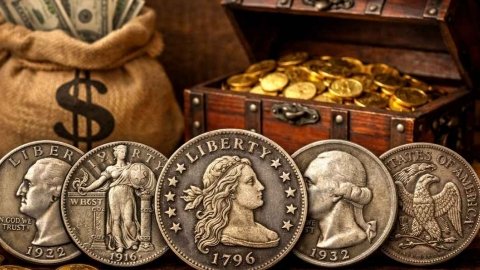
Have you ever checked your pocket change and wondered if one of those quarters could be worth a lot of money? In 2026, some U.S. quarters—especially those with rare dates, low production numbers, or minting mistakes—are still turning up in everyday circulation and selling for thousands of dollars at auctions. Coin collecting (also known as numismatics) remains popular because these small pieces of metal hold history and big potential value.
This guide focuses on the top 5 rare U.S. quarters that can be worth thousands today. We’ll use simple words to explain what makes them special, their estimated values in 2026 (based on recent sales and market trends), and tips to spot them. Values depend on the coin’s condition—pristine (high-grade) ones fetch the most. Always get a professional grading service like PCGS to check authenticity.
1. 2004-D Wisconsin Extra Leaf Quarter
This is one of the most famous modern error coins from the State Quarters program (1999-2008). The reverse shows Wisconsin’s corn stalk with an extra leaf—either a “high leaf” (above the ear) or “low leaf” (below)—caused by a die flaw at the mint.
Why it’s valuable: The error is eye-catching and limited. Collectors love it for the surprise factor.
Estimated 2026 value: $300–$3,000+ (higher for top condition; some pristine examples hit $1,000–$5,000 in recent years).
How to spot it: Look closely at the corn on the back with a magnifying glass. The extra leaf looks out of place.
2. 1932-D Washington Quarter
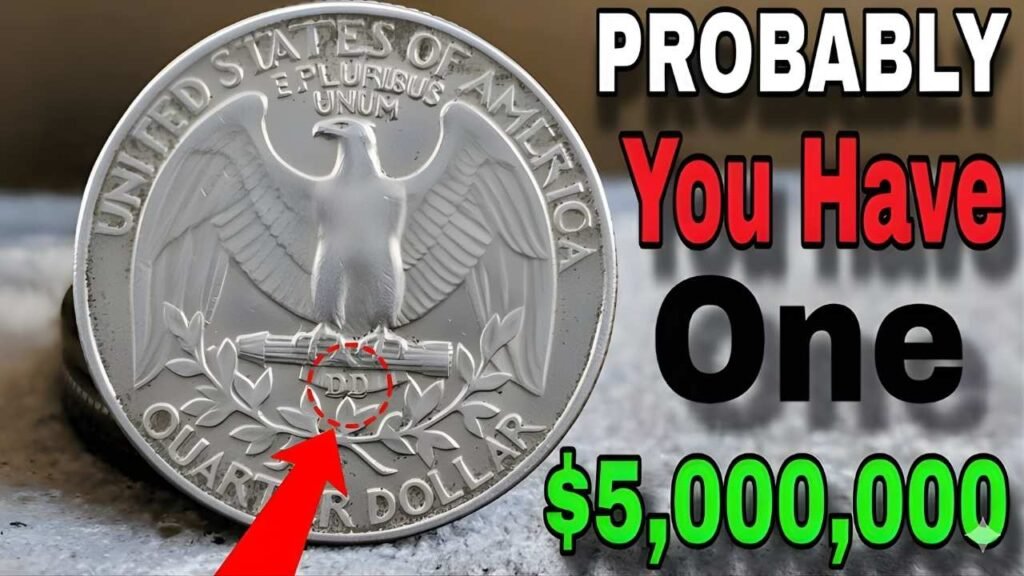
The first year of the Washington quarter series, honoring George Washington’s 200th birthday. The “D” means it was made in Denver, with very low mintage (only about 436,000 made).
Why it’s valuable: It’s a key date with the lowest production in the series. High-grade examples are super rare.
Estimated 2026 value: $500–$15,000+ (circulated ones start lower, but mint-state coins can go much higher).
How to spot it: Check the date (1932) and tiny “D” mint mark below Washington’s neck on the front.
3. 1999-P Connecticut Broadstruck Quarter
A striking error where the coin was hit outside the normal collar, making it wider and thinner than usual (broadstruck). The “P” is for Philadelphia mint.
Why it’s valuable: Major mint errors like this are uncommon and dramatic.
Estimated 2026 value: Over $4,000 for nice examples (some reports show high prices for rare planchet errors).
How to spot it: The coin looks oversized or spread out, with design elements closer to the edge.
4. 2005 Minnesota Doubled Die Quarter
From the State Quarters series, some show doubling (blurry or repeated elements) on trees, lettering, or the state outline due to a doubled die.
Why it’s valuable: Doubling creates a clear visual mistake that’s exciting for collectors.
Estimated 2026 value: $500–$700+ in pristine condition (dramatic versions can reach higher).
How to spot it: Use magnification to see extra or partial trees to the right of the state map.
5. 1999 Delaware Spitting Horse Quarter
Another State Quarter error: A die crack makes it look like the horse on the reverse is “spitting” (a line from its mouth).
Why it’s valuable: Fun, noticeable variety from the first year of the program.
Estimated 2026 value: $200–$300+ for sharp examples (circulated ones around $10–$25, but better ones fetch more).
How to spot it: Look for a raised line coming from the horse’s mouth on the back.
Here’s a quick comparison table of these top 5:
| Rank | Quarter Name | Year/Mint | Key Feature/Error | Estimated Value (2026) | Where to Look |
|---|---|---|---|---|---|
| 1 | Wisconsin Extra Leaf | 2004-D | Extra leaf on corn stalk | $300 – $3,000+ | Pocket change, rolls |
| 2 | 1932-D Washington | 1932-D | Low mintage key date | $500 – $15,000+ | Older collections |
| 3 | Connecticut Broadstruck | 1999-P | Oversized broadstrike | $4,000+ | Circulation errors |
| 4 | Minnesota Doubled Die | 2005 | Doubling on trees/lettering | $500 – $700+ | State quarters rolls |
| 5 | Delaware Spitting Horse | 1999 | Die crack “spit” line | $200 – $300+ | Early state quarters |
Values can change with market demand, silver prices (for older ones), and auction results. In 2026, error coins from the State Quarters era remain hot because many people still have them in jars or change.
Tips to Find Valuable Quarters in 2026
- Use a magnifying glass or phone loupe to check for errors like doubling, extra parts, or odd shapes.
- Look at dates, mint marks (P, D, S), and design details on both sides.
- Search old change jars, bank rolls, or pocket change—some errors still circulate.
- Join online coin groups or follow numismatic news for updates.
- If you think you have one, don’t clean it (that lowers value)—get it graded professionally.
Conclusion
Rare U.S. quarters worth thousands prove that everyday coins can hide real treasures. From mint errors like the Wisconsin Extra Leaf to key dates like the 1932-D, these pieces combine history, rarity, and excitement. In 2026, with strong collector interest in State Quarters and Washington series errors, now is a great time to start looking. Grab a handful of change today—you might uncover your own fortune. Happy hunting, and always verify with experts before selling!
FAQ
What makes a quarter worth thousands?
Rarity (low numbers made), minting errors (mistakes at the factory), and excellent condition drive high prices.
Are these quarters still in circulation in 2026?
Yes, especially State Quarter errors like Wisconsin or Minnesota varieties can still turn up in change or old rolls.
How do I check if my quarter is valuable?
Use a magnifying tool to spot errors. Compare to online guides or apps. Get professional grading for big finds.
Where can I sell a rare quarter?
Try coin dealers, auction sites like eBay, or major houses like Heritage Auctions. Always get an appraisal first.